
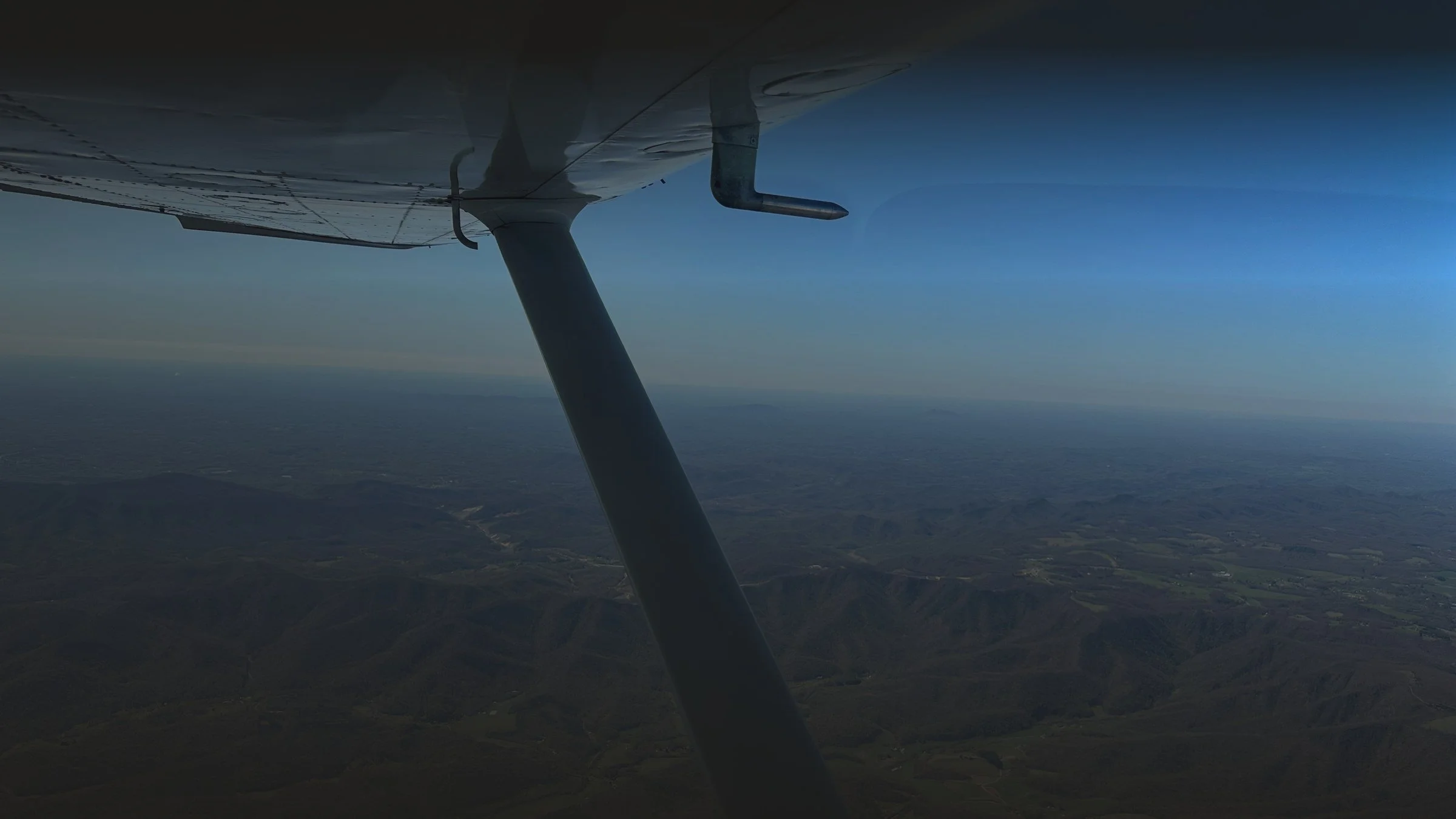
Commercial Pilot · Part 61 · Single-Engine Land
The hours are the hard part
Everybody passing the commercial checkride flew the same maneuvers. What separates the pilots who get there from the ones who don't is finding two hundred and fifty hours they can afford. That is the problem we built this around.
What the FAA requires under 14 CFR 61.129(a)
250hrs
Total flight time before the practical test.
100hrs
As pilot in command, at least 50 of them in airplanes.
50hrs
Cross-country flight time inside that pilot in command time, at least 10 of them in airplanes.
10hrs
Of training in a technically advanced airplane, a complex airplane, or a turbine-powered airplane.
These are the Part 61 minimums for a single-engine commercial certificate. Most pilots arrive at the checkride with more, and that is normal.
What the certificate changes
You stop being the one who pays
A private certificate says you can fly. It also says you cannot be paid for it. The commercial certificate moves that line, and the training is mostly about earning the right to stand on the other side of it. Tighter tolerances, better judgment, and the habit of flying to a standard when nobody is watching.
This page covers the single-engine land certificate, trained under Part 61 at Ocean City. We do not offer multi-engine training.
The tolerances tighten
The maneuvers you already know get held to a narrower band, and new ones arrive. Chandelles, lazy eights, eights on pylons, power-off 180s to a spot. Precision stops being a nice result and becomes the requirement.
It is usually a step, not a destination
Most people who earn it go on to instruct, and many go on from there to an airline. The certificate is what opens the door; it is rarely the room you stay in.
You fly farther than you have before
One cross-country of at least 300 nautical miles, with a leg of 250 or more from where you started. Five hours at night, with ten takeoffs and landings at a towered field. Most of the certificate happens away from home.
None of that is the expensive part. The expensive part is the two hundred and fifty hours, and that is the next section.
The hours
Nobody talks about how you actually afford 250 hours
A new private pilot has somewhere around seventy. The commercial certificate needs two hundred and fifty. The gap is not a training problem. It is a hundred and thirty hours of flying that has to happen before an examiner will look at you, and the usual answer is to pay full rate to fly circles for the sake of the logbook.
We do it differently. Once you hold the endorsement to act as pilot in command of this airplane, you fly it at a reduced hourly rate with an instructor along. You are the one flying and you log the time. The instructor's hours are on us.
Your high-performance endorsement comes with the airplane, not as an extra. A Cessna 182 has more than 200 horsepower, so 14 CFR 61.31(f) requires ground and flight training plus a one-time logbook endorsement before you can act as pilot in command of one. You will need it before your first time-building hour, so it happens early, it happens here, and there is no separate course to buy.
Fly with purpose, not in circles. An hour spent orbiting the practice area and an hour spent going somewhere cost the same and are not worth the same. We plan the time-building around trips that do real work. The long cross-countries the certificate requires, night landings at a towered field, unfamiliar airports, weather you have to actually think about. You finish with the hours and with the experience the hours were supposed to give you.
If you did your instrument rating here, much of this is already flown. Instrument training is cross-country training with the hood on, and every one of those hours counted. Pilots who come to us for commercial after finishing an instrument rating with us usually need far less than a hundred and thirty hours, and their total comes in well below the estimate below. Bring the logbook and we will tell you where you actually stand.
How you'll learn
Ground school that respects your calendar
Traditional ground school bills you by the hour to sit in a room and be taught a syllabus at the room's pace. There's a better way to do it, and it doesn't cost you more: you take the material in at your own speed, and your instructor's hours go to the part only an instructor can do.
01
Take the material in at your pace
You work through a professionally produced online commercial course section by section. Early mornings, lunch breaks, whenever you are actually sharp. Rewind anything. Nobody is waiting on you and you are not waiting on anybody.
02
Sit down with your instructor, regularly
After each section you go through it one-on-one. What landed, what didn't, and the questions a video can't answer. Your instructor is registered inside the course and can see where you are before the session starts, rather than asking you.
03
Then go fly it
Each section's knowledge goes into the airplane while it is still fresh. Commercial maneuvers reward this more than anything else you have trained for. A lazy eight makes sense in the airplane in a way it never does on a page.
On a screen or across a table. Your call, and you can change your mind. The one-on-one sessions happen either way and they happen regularly. Some people think better on a screen share. Some want to be in the room. Neither one is the real version and neither one is the discount version.
The airplane
One airplane, and it already meets the requirement
A Cessna 182. High-performance, fixed gear, constant-speed propeller, and equipped to a standard that satisfies the ten hours of training without sending you somewhere else to find it. You train in it, you build your hours in it, and you take your checkride in it.
Primary flight display
Aspen Evolution Pro MAX
Attitude, altitude, airspeed, heading and vertical speed on one electronic display.
Multifunction display
Garmin GTN 750
Touchscreen navigator with a continuous moving map showing the aircraft's GPS position.
Autopilot
Two-axis, integrated
Coupled to the navigation system. You will learn to use it, and to fly without it.
The ten hours do not need a retractable-gear airplane. 14 CFR 61.129(a)(3)(ii) asks for ten hours of training in a complex airplane, a turbine-powered airplane, or a technically advanced airplane. A TAA is defined in 61.129(j) as one with an electronic primary flight display, an electronic multifunction display with a continuously shown moving map, and a two-axis autopilot integrated with the navigation guidance. All three are in the panel above. This airplane is the TAA route, and those hours can be flown here.
Headsets are in the airplane. Bring your own if you have a pair you like. Most pilots eventually do.
It is high-performance, not complex. Complex means retractable gear, flaps and a controllable-pitch propeller together. This airplane has the propeller but fixed gear, so it is not complex, and under the current rule it does not need to be. We would rather say that plainly than let you find it out later.
What it costs
You pay for the hours you use
There is no package to buy, nothing to use up, and nothing to finance. Both the airplane and your instructor bill to the tenth of an hour. Airplane time is Hobbs time. It starts when the engine does, so taxi and runup are included. Instructor time is on the clock: a debrief that runs twenty minutes is three tenths, not a full hour.
A typical commercial certificate here
about $29,050
Twenty hours of ground instruction, fifty hours of flying with an instructor, and a hundred and thirty hours of time building. The full breakdown, line by line, is on the pricing page. It is an estimate, not a quote and not a cap.
Assumes you arrive holding a private certificate with about seventy hours. Bring more and the number comes down. The time-building hours are the largest line in it, and every hour already in your logbook is one you are not buying from us.
Not included: the examiner's fee, paid directly to the examiner and typically in cash. The FAA knowledge test fee. The online ground course, which you buy direct from the provider.
Headsets are in the airplane. Bose up front, and more in the back for anyone riding along. Bring your own if you have a pair you like. Most pilots eventually do.
Getting started: an application and a $500 deposit. The application is where we collect the identity documents the TSA requires before training begins. A federal requirement, not ours, and worth starting early. The deposit goes into your own account and is drawn down as you fly. We ask you to keep that balance positive.
Whatever is left when you finish comes back to you. It was never our money. If you stop training, the same is true. The unspent balance is yours.
Your rate is your rate. If our prices change, they change for pilots starting something new. They never change for someone already in training. A hundred and thirty hours takes a while, and you should not have to watch fuel prices wondering what your own training is going to cost by the end of it.
We would rather quote you than have you guess. The estimate above is built on an average pilot. Yours will be different, and the difference is almost always the hours you already have.
How the training runs
Six stages, in order
Part 61 means the sequence bends around your schedule rather than a cohort's. The order below is how the skills stack, not a fixed calendar.
01
A look at your logbook
Before anything else we count what you already have. Total time, pilot-in-command time, cross-country, night, instrument. That count decides the shape and the cost of everything after it, and it is a twenty-minute conversation rather than a commitment.
02
The high-performance endorsement
Ground and flight training in the 182, then a logbook endorsement under 61.31(f). It comes first because you need it before you can act as pilot in command of this airplane, and every hour after this one depends on it.
03
Building the time
The longest stage and the one with the most hours in it. Trips rather than laps. Unfamiliar fields, real weather decisions, and the cross-country and night requirements knocked out along the way instead of bolted on at the end.
04
The long cross-country and the night work
One flight of at least 300 nm with landings at three points, one of them 250 nm or more from where you started. Separately, five hours at night with ten takeoffs and landings at a towered airport. Easton and Salisbury both have towers open into the evening, and both are an easy hop from Ocean City. This is winter work: in June the sky is not properly dark until well past nine, and the towers close not long after.
05
The commercial maneuvers
Chandelles, lazy eights, eights on pylons, steep spirals, and power-off 180-degree accuracy landings, flown to commercial tolerances. Ten hours of instrument training sits alongside this, and if you already hold an instrument rating, much of that is behind you.
06
The checkride
You go when you and your instructor are both confident, not when a calendar says so. Examiners book up well in advance, so we start looking at dates early and build in the room to move one if you are not ready. You fly the test in the airplane you trained in.
Questions people ask first
Straight answers
-
Two different answers, and both matter. A third-class medical or BasicMed is enough to train and to take the practical test. To actually exercise commercial privileges, meaning to be paid to fly, you need a second-class. So if you are flying on BasicMed now, you can train and pass the checkride on it, and plan for the second-class before you go to work. Anything about your own history is a conversation for an aviation medical examiner, not for us.
-
No. 14 CFR 61.129(a)(4) allows those hours to be flown either solo or while performing the duties of pilot in command with an authorized instructor on board. We use the second route. You are the one flying and the one logging it, and on a 300 nm cross-country into terrain you have never seen, having an experienced instructor in the right seat is not a consolation prize.
-
Not required, but it changes the arithmetic enough to be worth a conversation. Commercial needs ten hours of instrument training either way, and instrument training is cross-country training with the hood on, so those hours do double duty. A pilot who holds an instrument rating usually reaches the commercial checkride cheaper and faster than one who does not.
-
No. This is Commercial Pilot, Airplane Single-Engine Land. We train in one airplane and it has one engine. A multi-engine add-on is a separate rating in a separate airplane, and it is not something we offer.
-
Mostly a function of how often you fly, because the hours are the bulk of it. Somebody flying two or three times a week moves through it in a very different span than somebody flying twice a month, and weather on the coast has a vote in both cases. We will give you a realistic window once we have seen your logbook and know how often you can actually be at the airport.
-
Sometimes, depending on the aircraft, its equipment, and what our insurance will cover. Worth asking rather than assuming either way. Note that the ten hours in a technically advanced airplane have their own equipment requirements, so even pilots who own something may fly that portion here.
-
Yes. Hours are hours, and the ones you fly here go in the same logbook the airlines read. The commercial certificate is generally the point at which the path stops being a hobby and starts being a career plan, and most people go on to instruct while they build toward the airline minimums.
Commercial Pilot
Start with your logbook
Tell us your total time, your pilot-in-command time, and how much of it is cross-country. We will tell you what your commercial certificate would actually take, including if the honest answer is that you should do something else first.