
Pilots N Paws
Build Time.
Save Lives.
Fly shelter animals to the rescues and foster homes waiting for them. You do the flying, the time is yours, and you fill the airplane at the end of the day. That's the whole cost.
The arrangement
Fuel. That's the whole invoice.
What you pay
You fill the airplane
You fill the airplane at the end of the day. Nothing else is billed, and no money changes hands with us at all.
The airplane
Not charged
No hourly rate, no minimum, no surcharge on top. The airplane goes because the mission does.
The instructor
Aboard the whole trip
An FAA Certified Flight Instructor flies with you, acting as your instructor for the flight. That time is donated, same as yours.
Nobody is paid to fly these missions. Not you, not us. That's the entire reason the arrangement can be this simple.
Pilots N Paws
There's a better hour than another lap around the pattern.
Pilots N Paws is a volunteer network that moves animals out of shelters that have run out of room and into the rescues, fosters and adoptive homes waiting for them. Often several states away, almost always on a deadline. The legs are flown by general aviation pilots, on their own time.
We fly those legs. When one comes up and a pilot wants the hours, you come with us and you do the flying, front to back. We don't charge for the airplane and we don't charge for the instructor. You fill the airplane at the end of the day and the flight is square.
The catch, stated plainly: there isn't one, and that's deliberate. Nobody is being paid, so there is nothing to sort out afterward. Fuel in the tank keeps it that simple.
How it runs
A mission, start to finish.
No two are the same, but they all go roughly like this.
01
A request comes through
A shelter needs animals moved and a rescue at the other end has agreed to take them. The request names the pickup field, the destination, how many animals, and when they have to be there.
02
We look at it honestly
Distance, weather, daylight, weight and balance, and whether the airplane, you and your instructor are all up for it. Plenty of missions get turned down. An animal waiting one more day is a far better outcome than an airplane pressing into weather it shouldn't.
03
You plan it
Route, fuel stops, alternates, the whole thing, with an instructor sitting next to you rather than a checklist grading you. This part is worth as much as the flying.
04
You fly it
You're at the controls from the ramp back to the ramp. Cross-country, unfamiliar fields, real decisions with a real reason to get them right. The time goes in your logbook.
05
Fuel up, put the airplane away, go home
You and your instructor top the tanks and get her back in the hangar together, same as any other flight. Then you drive home. That night, a few states away, an animal is asleep somewhere better than where it woke up, and you're the one who flew it there.

One airplane, one afternoon, six carriers.
Straight answer
This is not a shortcut to 250 hours.
Missions come when they come. There might be three in a month and none the month after. The routing is decided by where the animals need to go, not by what your logbook is short of, and any of it can be scrubbed by weather on the morning.
If you're working toward a commercial certificate on a timeline, rescue hours count the same as any other hours. You just can't plan around them. Most pilots use both: rescue flights when a mission comes up, and our time-building program for the hours they need on a date certain.
Rescue flying is the part we'd be doing anyway. You're welcome in it, and the hours are real. They just aren't a schedule.


Why we bother
The flying is the easy part.
Every animal in the back of that airplane is leaving somewhere that ran out of room, or time, or money. A drive that would take two days and a volunteer nobody has takes an afternoon and a tank of fuel instead.
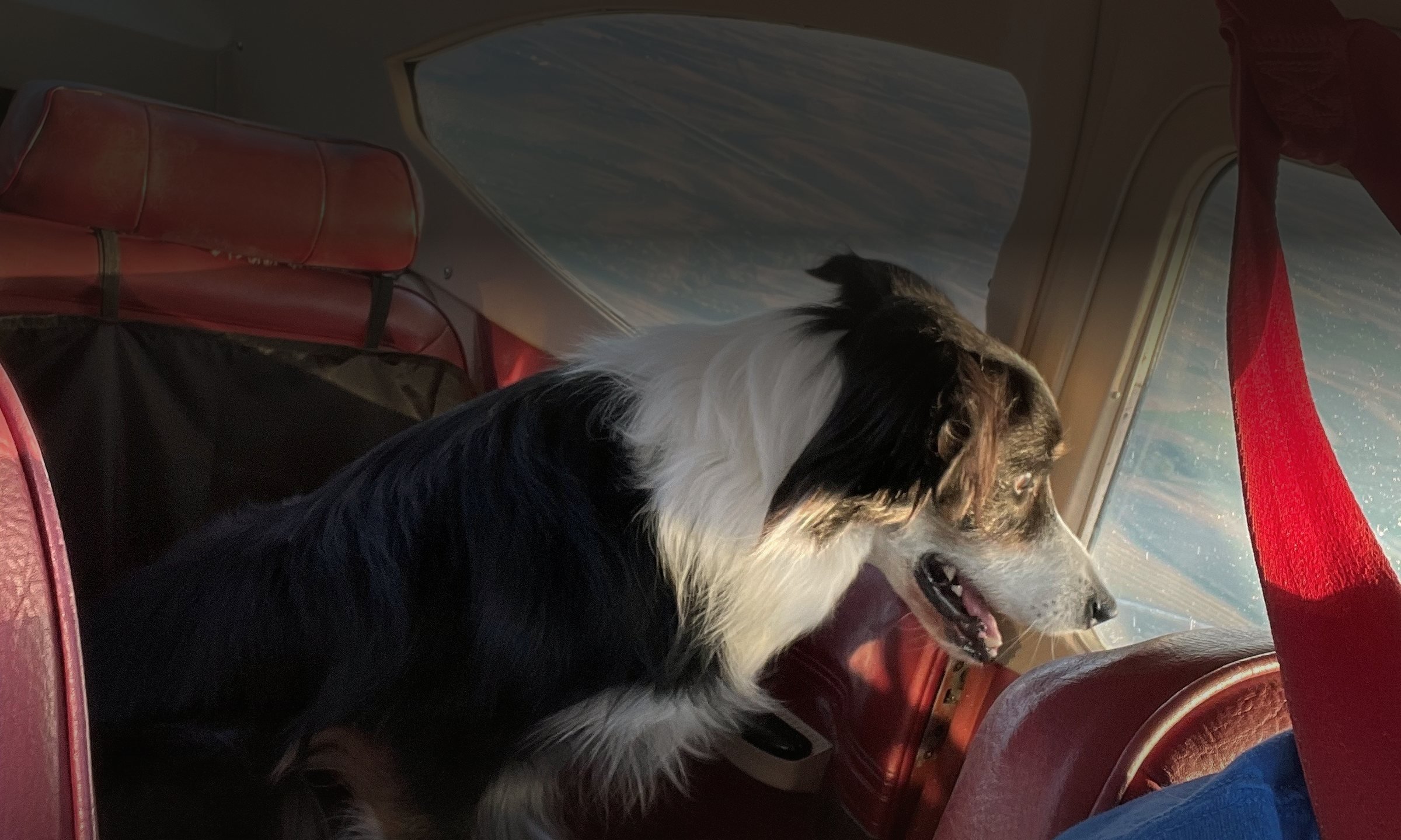
Most of them settle in about ten minutes and sleep the whole way.

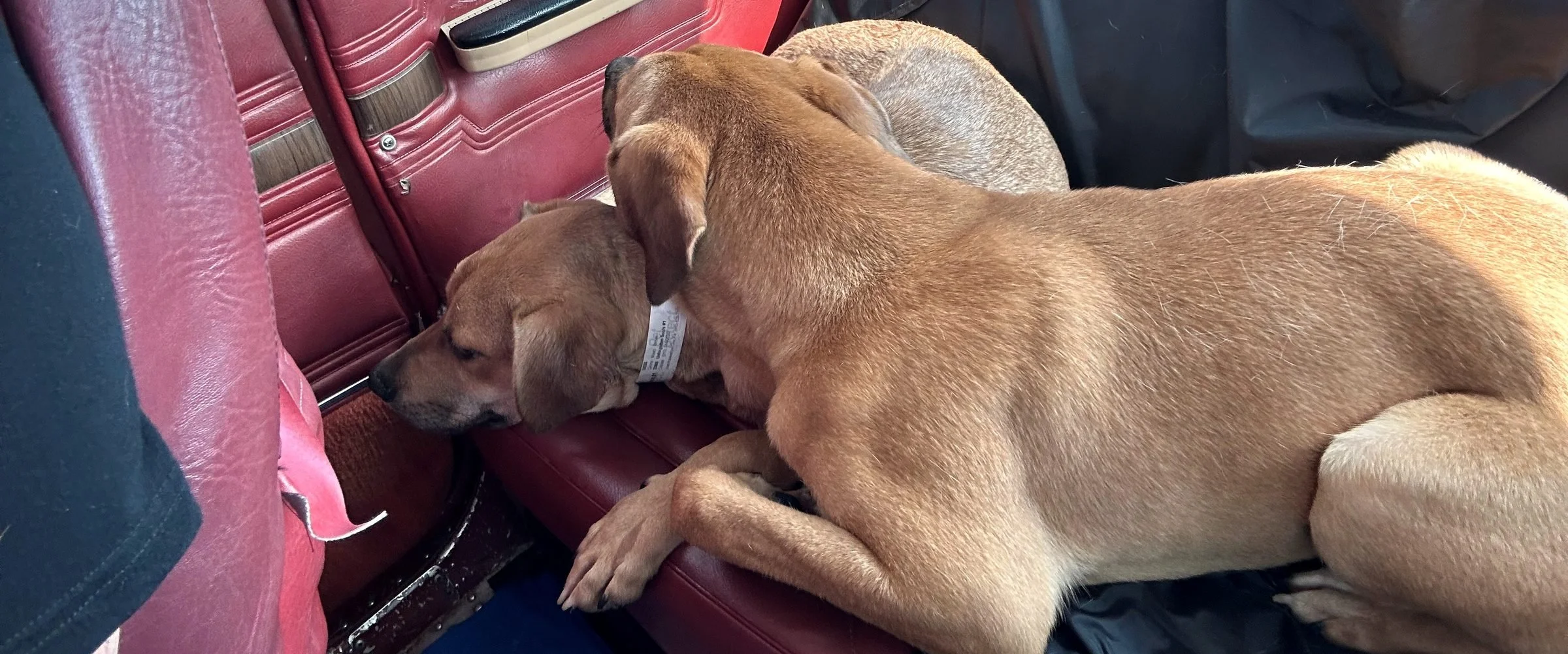
This photograph was taken a few days before he flew.
He's thin in a way that's hard to look at, and we've left it in rather than choose a prettier picture. He isn't unusual, either. Most of the animals that ride in the back of that airplane were running out of time somewhere. Every one of them was worth the trip.
Questions
Before you ask.
-
No. An instructor is aboard every flight in this airplane, rescue missions included. That's our insurance and it isn't negotiable. It also means you've got someone in the right seat on a long cross-country you've never flown before.
-
No, and neither are we. Nobody aboard is compensated for a rescue flight. You fill the airplane at the end of the day, which is what any pilot does at the end of any flight.
-
They're flight time in your logbook like any other. What they're worth toward a particular certificate depends on the certificate and on how the flight is logged, which is worth a conversation before you go rather than after.
-
Anywhere from an hour up the coast to most of a day. Long ones are usually flown as a relay across the network, with each pilot taking a leg.
-
Irregularly. Some months there are several and some months there are none. Tell us you're interested and we'll call you when one lands.
-
The mission waits. Animal transport runs on a schedule someone else set, and that's exactly the pressure that gets pilots into trouble. We'd rather make an awkward phone call than a bad decision.
Pilot qualifications, instructor availability, scheduling, insurance requirements and mission approval all apply.
Tell us what you're building toward.
One phone call. We'll tell you honestly whether rescue flying fits what you need, and what to do instead if it doesn't.